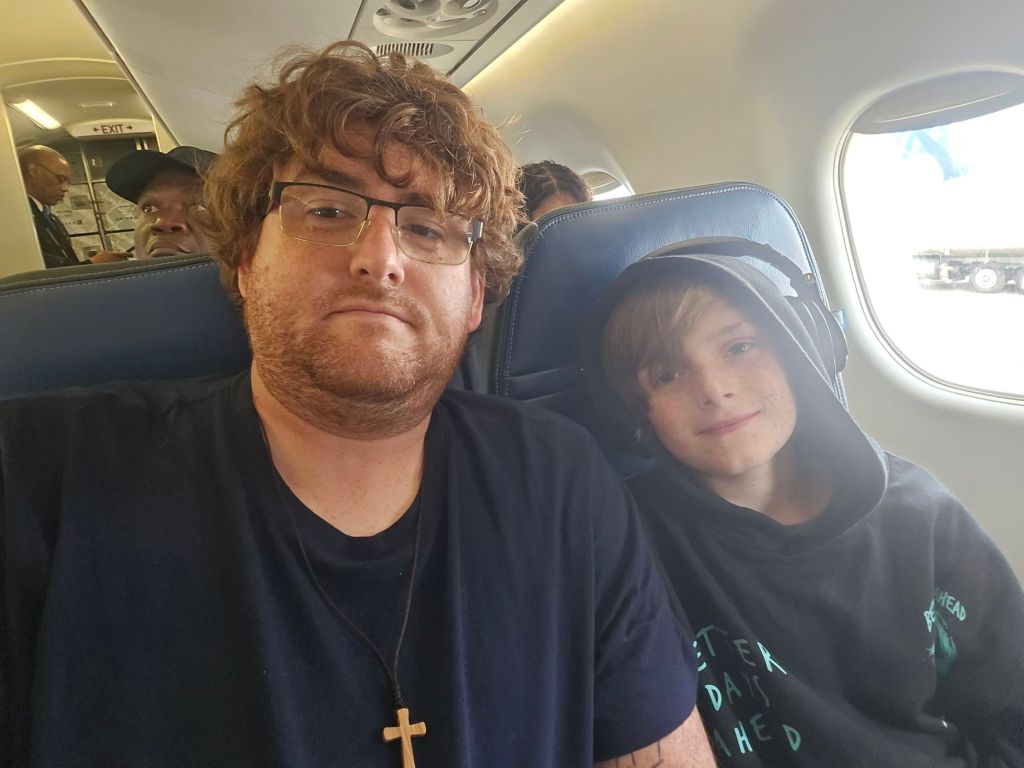
Home is something I’ve been thinking about a lot lately.
We just got back to Europe after two months visiting supporting churches and spending time visiting family in the USA. Before we left we (Rachel mostly) spent time laying out and organizing the things we wanted to take with us. These things she packed into black, zipper packing cubes and packed away with the skills of a champion Tetris player.
These are the only things we were able to take with us as we set off on our two month odyssey to North America.
But it was strange.
As we descended to land at the airport in Newark, New Jersey, it felt less like a homecoming than I’d expected. We did all the right things, including eating at Arby’s (don’t judge; it’s one of the things I miss the most) and making our offerings to the gods of consumerism on the altar of Walmart.
But the whole time I felt more like a visitor than someone who belonged. I suppose it didn’t help that we stayed in most places no more than a few days at a time. We did some sightseeing in our limited free time as well, so I’m sure that played a role as well.
But I realised something else when we landed in Brussels at the end of our American summer.
Somehow, Europe feels more like home to me now.
As I write this I sit on a TGV train, preparing to leave the station at Brussels and take me home to Calais. I’ve spent this morning roaming the streets of this beautiful European city, one of the capitals of the European Union in fact, and ordering coffee in French, while occasionally eavesdropping on the couple sitting next to us enjoying their food.
What once felt exotic now feels natural.
As many of my readers probably know, we’ve recently made the decision to continue our lives in Calais until our boys graduate from school. Perhaps we’ll stay even longer than that, but ten years feels like no small feat.
But we’ve come to love Calais. I’ve often commented to my wife that I was “born to live by the sea.” Calais is a small city, just large enough to have everything we need (well, most things anyway), but small enough that we feel like it doesn’t take long to come to know the town intimately. We know its beautiful things: the bike trail that takes us through several kilometres of the French countryside, the people who, while not having much in terms of financial resources, possess friendliness and generosity in spades, the smell of the salty air as you approach the beach while your stomach growls because you have one thing on your mind–the best fries in the north of France.
We’ve seen its ugly side too: the mid-century architecture where the city was hastily rebuilt after World War II, the dehumanisation of entire people groups whose only crime is seeking safety from oppressive governments, the way deindustrialization has taken away the prosperity of this once privileged town.
What I’m trying to say here is that we are committed to this place. Rachel and I are going to be working on our French skills, and I’m going to do what I can to be better connected in the local community, not because we feel like we have to, but because we want to leave this city better than we found it.
In the end, it seems home is wherever you decide it is. I’ve made no secret of the fact that I didn’t like Calais all that much when we first moved there. But I’ve made a conscious decision to look for things to love about it. It’s not hard to do when you really look; Calais has plenty of things to love.
Home is the place where we don’t ignore the things that make it difficult or ugly, but rather see those things as places to serve and love amidst the heartbreak and brokenness. And if I’ve learned anything in my four years living there, it’s that Calais has more than its share of both of those things.
For now we’re going to “seek the welfare of the city” as God commanded the Israelites when they found themselves living in a land where they weren’t born, because God goes on to tell them, “for in its welfare you will find your welfare” (Jeremiah 29:7).
And maybe that’s what I mean when I talk about home.