Looking Out the Train Window

Home is something I’ve been thinking about a lot lately.

We just got back to Europe after two months visiting supporting churches and spending time visiting family in the USA. Before we left we (Rachel mostly) spent time laying out and organizing the things we wanted to take with us. These things she packed into black, zipper packing cubes and packed away with the skills of a champion Tetris player.

These are the only things we were able to take with us as we set off on our two month odyssey to North America.

But it was strange.

As we descended to land at the airport in Newark, New Jersey, it felt less like a homecoming than I’d expected. We did all the right things, including eating at Arby’s (don’t judge; it’s one of the things I miss the most) and making our offerings to the gods of consumerism on the altar of Walmart.

But the whole time I felt more like a visitor than someone who belonged. I suppose it didn’t help that we stayed in most places no more than a few days at a time. We did some sightseeing in our limited free time as well, so I’m sure that played a role as well.

But I realised something else when we landed in Brussels at the end of our American summer.

Somehow, Europe feels more like home to me now.

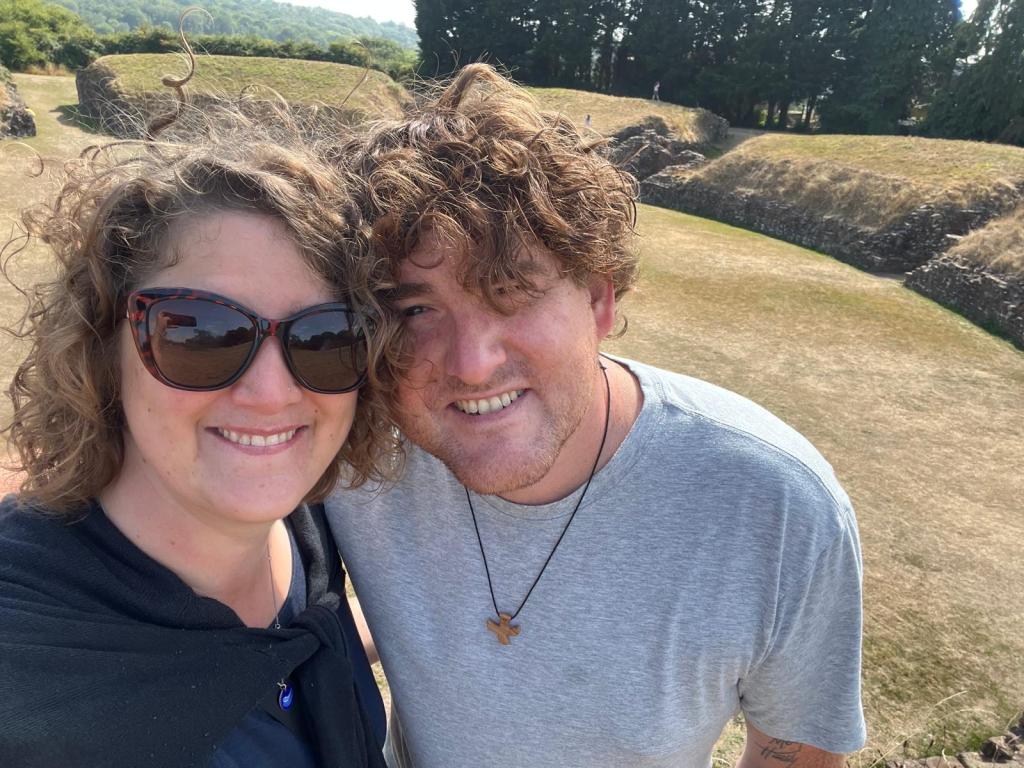
As I write this I sit on a TGV train, preparing to leave the station at Brussels and take me home to Calais. I’ve spent this morning roaming the streets of this beautiful European city, one of the capitals of the European Union in fact, and ordering coffee in French, while occasionally eavesdropping on the couple sitting next to us enjoying their food.

What once felt exotic now feels natural.

As many of my readers probably know, we’ve recently made the decision to continue our lives in Calais until our boys graduate from school. Perhaps we’ll stay even longer than that, but ten years feels like no small feat.

But we’ve come to love Calais. I’ve often commented to my wife that I was “born to live by the sea.” Calais is a small city, just large enough to have everything we need (well, most things anyway), but small enough that we feel like it doesn’t take long to come to know the town intimately. We know its beautiful things: the bike trail that takes us through several kilometres of the French countryside, the people who, while not having much in terms of financial resources, possess friendliness and generosity in spades, the smell of the salty air as you approach the beach while your stomach growls because you have one thing on your mind–the best fries in the north of France.

We’ve seen its ugly side too: the mid-century architecture where the city was hastily rebuilt after World War II, the dehumanisation of entire people groups whose only crime is seeking safety from oppressive governments, the way deindustrialization has taken away the prosperity of this once privileged town.

What I’m trying to say here is that we are committed to this place. Rachel and I are going to be working on our French skills, and I’m going to do what I can to be better connected in the local community, not because we feel like we have to, but because we want to leave this city better than we found it.

In the end, it seems home is wherever you decide it is. I’ve made no secret of the fact that I didn’t like Calais all that much when we first moved there. But I’ve made a conscious decision to look for things to love about it. It’s not hard to do when you really look; Calais has plenty of things to love.

Home is the place where we don’t ignore the things that make it difficult or ugly, but rather see those things as places to serve and love amidst the heartbreak and brokenness. And if I’ve learned anything in my four years living there, it’s that Calais has more than its share of both of those things.

For now we’re going to “seek the welfare of the city” as God commanded the Israelites when they found themselves living in a land where they weren’t born, because God goes on to tell them, “for in its welfare you will find your welfare” (Jeremiah 29:7).

And maybe that’s what I mean when I talk about home.
There Is No Sin in Empathy

I understand that I’ve been gone a while.

Don’t worry. It’s not your fault.

Your kind responses and encouraging words have been just what I needed to help me get through some of the things that I’ve been dealing with.

I want this blog to be about more than theology. I love theology, and I love discussing and debating it, but what makes us human is more interesting and important to me than theology.

I am a human. I have faults. 

If you’ve spent any amount of time with me, you won’t be surprised to hear that.

But my faults don’t define me. They don’t make me who I am.

What I often notice is that we can get things right time after time, but the one time we make a mistake or let something slip through the cracks, we can quickly become identified with that one mistake.

But, my friend, you are more than one mistake. You are the sum of more than your faults. It’s a hard lesson to learn, especially to those of us who grew up in a high-control environment where we weren’t allowed to make mistakes.

But if you hear me say one thing and only one thing, let it be this: You are beautiful.

Your humanity does not make you beautiful. You are beautiful because you are human.

You will fail.

You will hurt people you care about.

You will end your day lying in bed, letting the tears fall that you were too embarrassed to set free during the daytime.

But despite all of that, you are beautiful.

Let yourself cry. Let yourself fail. But then pick yourself up and move on. Learn from your mistakes.

There is a beauty in brokenness and sorrow that can’t quite be captured in words. But the more we experience those things, the more empathetic we can be towards other beautiful humans who are struggling.

And there is no sin in empathy.

I’ll end with a quote from a song by one of my favourite bands, Switchfoot:

“Time to take my own advice: Love alone is worth the fight.”

The Long Friday

Wow, it’s Holy Week again.

And just like last year I’m sitting here writing about death and resurrection from the perspective of a few women that I know.

But it’s hard to say the same thing over and over again, hoping that something changes, and knowing that change seems to come slowly and, in this case, change is just making things harder for the people that we serve here in Calais.

Our friends are facing a walking death in one sense. Their lives are of almost no importance to those in power. What’s the life of one migrant here and there, if we can stop the boats? After all, they’re poor and come from war-torn countries. They’re not like us.

Or so the rhetoric goes.

And I’m so tired of hearing Christians talking about illegal immigration and following laws, while at the same time ignoring the law-breaking of the politicians that we like.

And only the people at the bottom get hurt.

Someone pointed out to me recently that when Christians are talking about politics they almost always quote the Old Testament or some of Paul’s writings.

The one person they never seem to quote much is Jesus.

If we really read the words of Jesus we see a radical welcome, a radical hospitality that calls all people beloved. Jesus ate with prostitutes and sinners. And you’d better believe that he would have eaten with migrants too.

And the kicker is that Jesus called out the religious leaders for their hypocrisy and their ignoring of things like justice and mercy. And you know what happened to him?

He was executed.

The message of Jesus always infuriates those in power because it turns the world on its head. Jesus told us that in God’s Kingdom, “Everyone who is now last will be first, and everyone who is first will be last” and in contrast to the great ones of his day, “But don’t act like them. If you want to be great, you must be the servant of all the others.”

So the key to greatness is not power. 

It’s service.

The rulers were so incensed with his subverting message that they hung him on a cross, the cruelest punishment of their day.

But there’s something else to take away from this story.

Even though it seems that the enemy wins. Even though it seems that darkness might rule for a little while, “The light keeps shining in the dark, and darkness has never put it out.”

And we know that,

“Christ died for our sins,

    as the Scriptures say.

   He was buried,

    and three days later

he was raised to life,

    as the Scriptures say.”

So have hope, my friends. Even though it seems now that the darkness is winning, that the forces of evil cannot be overcome that we are asking ourselves, “Didn’t your Lord promise to come back? Yet the first leaders have already died, and the world hasn’t changed a bit,” we do not walk hopelessly.

So we keep walking. We keep working. We keep living out the Kingdom.

The Friday seems so long it might never end. But Sunday will be here soon.

You belong here. Our friends belong here. God’s Kingdom is big enough for all people.

If It Isn’t Good News for the Poor

“If you can’t afford to eat, you need to get off your ass and get a job!”

I’ve heard this preached from the pulpit so many times. Maybe without the expletive.

The rich are getting richer and richer in the USA. They’re hoarding billions and billions of dollars, and the amount of people below the poverty line continues to grow.

During the government shutdown last fall, over 40 million Americans were at risk of losing their food stamp benefits. 

Also last year, Tesla, famously led by Elon Musk, paid zero dollars in taxes.

But we’re supposed to believe that the people who can’t afford food are the problem?

It’s incredible to me how well the wealthy have done at shifting the burden off of themselves and onto the poor.

Calling the poor the problem while supporting the wealthy is a backwards theology.

God’s heart for the poor has been evident from the beginning. You can find numerous examples of this heart throughout the Hebrew Scriptures. I won’t take the space to list out the verses here, but this link provides a good overview of many of those passages. 

The New Testament is also littered with commands to serve the poor. James 1:15-17 even tie providing for the poor directly to one’s faith, “Imagine a brother or sister who is naked and never has enough food to eat. What if one of you said, “Go in peace! Stay warm! Have a nice meal!”? What good is it if you don’t actually give them what their body needs? In the same way, faith is dead when it doesn’t result in faithful activity.”

Jesus has harsh words for the rich, however. Simply look at Matthew 19:24, “In fact, it’s easier for a camel to squeeze through the eye of a needle than for a rich person to enter God’s kingdom.”

In the Gospel of Mark, Jesus tells the rich young ruler, “You are lacking one thing. Go, sell what you own, and give the money to the poor. Then you will have treasure in heaven. And come, follow me.”

I’ve heard the story of driving out the money changers in the temple brought up as a defense for the righteous indignation evangelical Christians seem to have against immigrants or the poor or homosexuals, etc. They say, “Even Jesus used a whip and overturned the tables in the temple!”

But they even get this wrong. Why did Jesus do this? He tells us himself: “Get those doves out of here! Don’t make my Father’s house a marketplace.”

Yet here we are, doing the exact same thing the sellers in the temple were doing. We’ve lost our way.

The church has become a marketplace, a place for sale to the highest bidder. What would Jesus say if he were here now?

I think a lot of people would be surprised. A lot of people would be angry. A lot of people would try to crucify him.

Why?

Not because he tells you not to be on government benefits, not because he tells you not to be gay.

But because of the same things he said to the religious leaders in his own day:

“You Pharisees and teachers are show-offs, and you’re in for trouble! You give God a tenth of the spices from your garden, such as mint, dill, and cumin. Yet you neglect the more important matters of the Law, such as justice, mercy, and faithfulness. These are the important things you should have done, though you should not have left the others undone either.”

So to end my rambling here, being a Christian does not mean condemning the poor for being poor. It means calling out the hoarding of wealth among the ruling class and fighting the systems that make their hoarding possible.

So rather than worry about our taxes going to pay for food stamps, let’s increase taxes on the wealthiest Americans.

This is keeping in line with the gospel of Jesus.

Because Jesus was sent “to tell the good news to the poor” (Luke 4:18).

Let’s look for ways to carry out the words of our Savior, being “doers of the Words and not hearers only” (James 1:22).

Caffeinated Chronicles 14: Wii Bowling and the Kingdom of God

I ended my last post talking about my experience of moving to Atlanta. It was definitely a turning point in my life, one that started a few things and put to the test some things I didn’t even know about myself yet.

And so I guess it’s time to get back to sharing about my development as a person and as a person of faith.

Atlanta is a beautiful city. For years I wanted to move back there to live, but I know there’s very little chance of that happening anymore. That’s OK. I’m happy with how my life has turned out, but Atlanta will always hold a special place in my heart.

As I said last time, my team lived in a house in the middle of a trailer park. Each of the Atlanta Mission Year teams had different projects or areas of focus. My team’s focus was an after school program.

During the school day we had other volunteer opportunities and responsibilities. Andrew and I worked at a senior recreation center in East Point. We mostly helped out with odd jobs there. I answered phones, helped teach an old lady about computers, and set up the new Nintendo Wii for the participants to use.

It was a lot of fun listening to older African American men trash talk each other while playing Wii bowling.

In exchange, we received free meal tickets to eat at the cafeteria. Every morning, we would eat grits and bacon. Andrew liked to put jelly In his, and dip his bacon in the maple syrup. I’ve never been a fan of mixing sweet and salty flavors, so I ate them separately.

In the afternoon, we’d get lunch there. The food was actually excellent, and the head chef had trained at a culinary school in New York City. She knew how to run a kitchen!

In the afternoons, we would take the after school program’s two 15 passenger vans to pick up the kids from school and take them to the Baptist church where the program was run.

Andrew and I were responsible for the fifth graders. We would always begin with a time of silent homework help, and then we would do an enrichment activity.

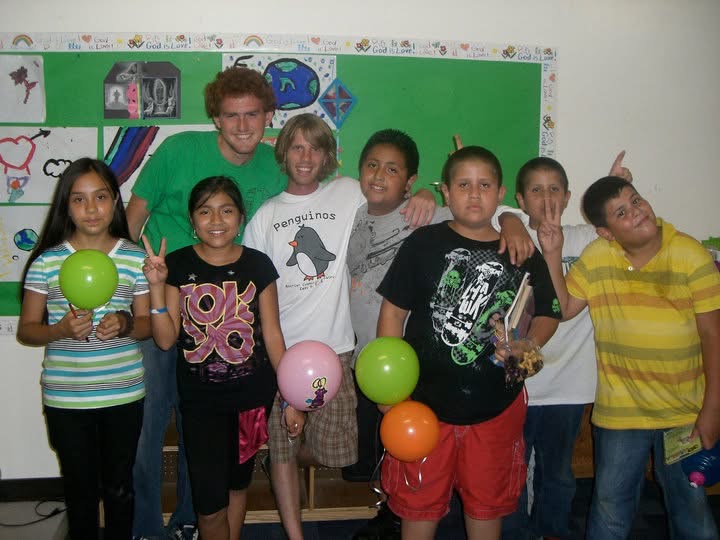
Here’s our class. I can’t believe how long it’s been.

I say enrichment, but I’ve never been very good with kids that age, so we often just played Mario Kart on the Wii. Oh well.

The program was run by an incredible woman named Tara. She had been involved with the ministry for a number of years and knew the families and kids in the trailer park where we lived very well. She eventually went on to become a teacher, and I have no doubt that she is an excellent one.

Then we would take the kids home for the evening.

And that was the basic rhythm of our year.

On Fridays we took a day called Sabbath, where we weren’t responsible for anything. My favorite activities were to go into the city and explore. I grew to know Atlanta really well. I still think Piedmont Park is one of the best green spaces in a city that I’ve seen.

Sundays we attended a local church. It was everything you would expect a black Baptist church to be. The music was incredible. The preaching was really, really long.

At the time, I wouldn’t have said that my theology was changed all that much during the year. Looking back now however, I see how it really did affect me and my life.

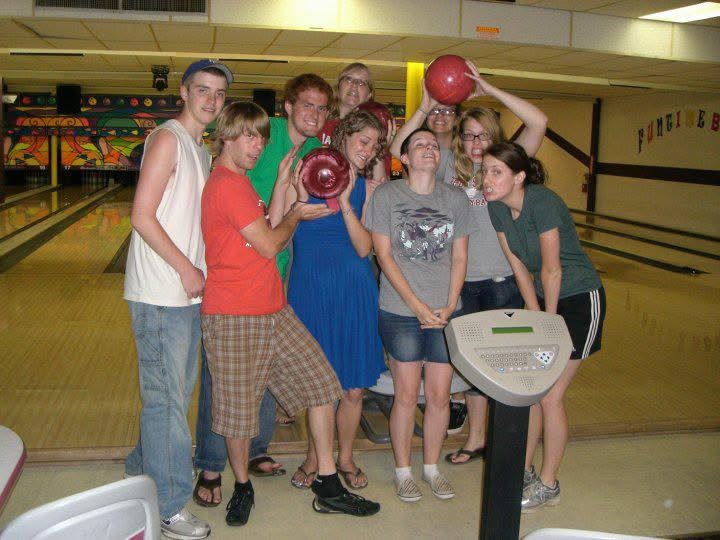
And my East Point team on bowling night, when Rachel and her friend and brother came to visit

For instance, it was my first real experience getting to know people from the immigrant population. This sparked a passion in me that I’m still following to this day in my work in France.

It was also the first time I seriously had my fundamentalist beliefs challenged in a way that caused me to rethink them. Looking back on some of the beliefs I had at that time really puts my changing theology into perspective.

It also gave me the opportunity to practice living with people from different places and with different perspectives and upbringings. This is another thing that I’m still practicing daily.

We lived all of these things intensely, day after day, for a year. And then it just ended.

The last night, I woke up very early to say goodbye to one of my roommates, and then one by one, everyone left. Andrew and I were the last ones.

And then I went home.

The lessons I learned and the ways that I grew during that year have stuck with me ever since, and I don’t think they’ll ever leave me.

It was one of many beginnings that have had lasting impacts on my journey through to this day. I just didn’t realize it then.

And for that, I am grateful.

Loving the Truth in the Time of Lies

I can’t just say nothing.

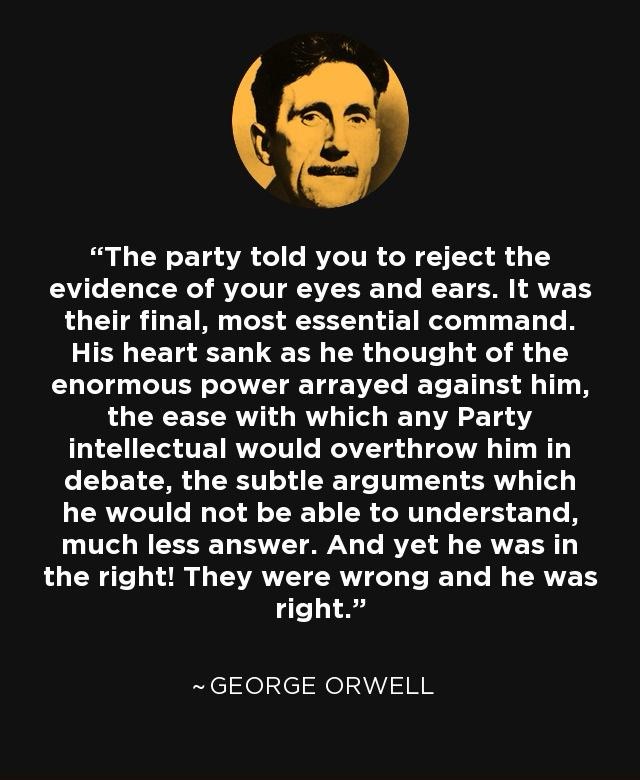
A woman was murdered in my hometown by the ones who are responsible for upholding the law. And at this moment the administration chooses to double down and blame the victim for the murder. It’s clear from the video what happened, but we have been told not to believe the evidence of our own eyes.

In addition, when Kristi Noem was asked about tear gas being used on American citizens, she denied it and said that isn’t what’s happening. When confronted with video evidence, she attempted to justify and explain it away.

There’s a George Orwell quote that’s been circulating lately, and I think it’s extremely relevant:

And I hear a certain segment of society claim that this is God’s will, that God is on their side. To use their own arguments against them, they are false prophets, preaching a false gospel. And Paul has some strong words to say about that:

When the wicked one appears, Satan will pretend to work all kinds of miracles, wonders, and signs. Lost people will be fooled by his evil deeds. They could be saved, but they will refuse to love the truth and accept it.So God will make sure they are fooled into believing a lie. All of them will be punished, because they would rather do evil than believe the truth.

This false gospel is losing ground, and I see good people in my home state standing up to it. Jesus doesn’t call us to follow our earthly leaders into destruction. The words of Jesus tell us plainly what he desires:

Teacher, what is the most important commandment in the Law?” Jesus answered: Love the Lord your God with all your heart, soul, and mind.This is the first and most important commandment. The second most important commandment is like this one. And it is, “Love others as much as you love yourself.”All the Law of Moses and the Books of the Prophets are based on these two commandments.

And if that isn’t enough, Paul echoes that sentiment:

Let love be your only debt! If you love others, you have done all that the Law demands. In the Law there are many commands, such as, “Be faithful in marriage. Do not murder. Do not steal. Do not want what belongs to others.” But all of these are summed up in the command that says, “Love others as much as you love yourself.” No one who loves others will harm them. So love is all that the Law demands.

It seems so simple, but it’s not easy at all.

I fail often.

The gospel of love is not simple; it’s not an end goal unto itself. It’s a journey into knowing God and living in sacred community with those God loves (which is everyone!).

So this is a call to let love be our protest in the face of the forces of evil. Let us not fall into this trap of the false gospel that is being proclaimed by those in power.

The band Switchfoot said it best, “Love is the final fight” and “there is no sound louder than love.”

Inhabiting Immanuel

Christmas is almost here.

This time of year is my favorite. It’s not quite the same here in France as it was back in Minnesota in the USA. For one, there’s no snow. It doesn’t get so cold. Family’s not around. So Christmastime is a different experience than it used to be.

But it’s still worth thinking about and reflecting on what Christmas means.

The Bible tells us that the Christ child would be called Immanuel, translated as “God with us.”

Take a moment and think about that.

Now, my faith has grown in a different direction from how it was in my fundamentalist upbringing. I find myself focusing less on literal miracles and questions of sin and salvation than I used to. My faith is now expressed in the concrete here and now most of the time.

This comes with its own difficulties that are different than the ones that came from my fundamentalist, sin-focused background.

And so, as Christmas comes, I want to try to remind myself of this incredible truth:

God has come to live among us.

This is the thing we celebrate at Christmas. God came into humanity, taking the form of a child. This child was born in humble circumstances. He didn’t come as a king, like the Creator of the Universe deserved. Instead, he was born to an unwed migrant in a farmyard.

Perhaps this Christmas story reveals something about the things that God cares about. Maybe it tells us something about where to look for God in our daily lives.

I must confess, I often get so caught up in the struggles of each day that I forget to think whether God might already be present with me, where I am.

God came down to earth and lived a life of deprivation and hunger. His family became refugees to Egypt. He grew up and took up his family trade. His story mirrors the ones I’ve heard hundreds of times in my work here. He knows what it’s like to accept hospitality. He knows how it feels to be innocently accused of violence.

As Christmas approaches, let’s take some time to make central this miracle to our lives. Let’s search for the very real ways in which God With Us inhabits the people on the margins: The homeless, the poor, the refugee.

He knows their stories, for he has lived them.

What if we can learn what it means to know God With Us if we look for the places his story took him?

Learning to Reach Out Before I Break

Dear friends,

I think I made a mistake. Not a big, irreversible one, but a mistake nonetheless.

I made the mistake of oversharing. I caused people to worry unnecessarily, and for that, I am sorry.

See, the last couple weeks have been incredibly stressful. And when I get stressed, I write. I want the things I write to touch others so that they know that they’re not alone in their feelings or struggles. Anyone who looks like they have it all together is putting on a front, I promise.

And so, I wrote a couple of posts, one here and one at my mission website. I didn’t think so many people would read and respond to the things that I said.

I said I felt like giving up. And it’s true: For a time I did. And it’s also true that I felt alone and depressed.

But I forgot something. I’ve got many, many people around me who care about me and about my family. The outpouring of support and concern has been truly touching.

But please don’t worry about me.

Next time I feel like giving up, I’ll start by reaching out to people that care, people I can talk to and work through things with. I won’t start with a blog post that causes people to worry. That does a disservice to people I love.

I’m getting support and I’m doing ok. Now that I’ve had distance and time from that period, I realize just how supported I am.

I just forget sometimes.

I suppose this is just a long way of saying thank you. Thank you to all of you who have reached out and reminded me that I don’t need to struggle alone. Thank you to all the people who worried about me and took time to remind me that they care.

You may never realize just how much your compassion means. I promise it won’t be forgotten anytime soon.

How Crisis Makes Us Hurt Each Other

I hope that this means something. I hope it can help someone, and that it gives some perspective and light in a world that often seems overwhelmingly bleak.

I’ve been struggling lately. Not with depression exactly, but with the overwhelming sense of pain and suffering that I experience daily here on the border.

And I’ve noticed something.

Faced with the pain and the constant state of emergency and crisis, we sometimes don’t have a target for our grief and stress, and so we often turn our sights on each other. I do it. I’ve seen many other people here do it too.

Because the situation is always so stressful, and things keep getting worse, I sometimes find myself expressing my frustration and anger in unhelpful, and sometimes downright harmful, ways.

I turn against my wife, my children, my family, my friends, or anyone else who happens to be nearby.

After all, I feel safe with them. I feel like I can be myself. And sometimes myself is a real a-hole.

And I often say things that, while not exactly untrue, hurt those closest to me.

Especially my wife.

I recognize it’s not a healthy way to deal with stress. I realize that I have a responsibility to love those God has placed in my life first of all.

But it’s easy to forget.

What I’m trying to say is that there is a lot of unnecessary fighting and expression of anger that causes those of us who work in these situations to turn on each other, rather than uniting against those who are truly responsible for the ills of society.

For example, we’ve been dealing with one of the most stressful situations we’ve ever had to deal with in our work for the past week. In this situation, it seems that no matter what we do, someone vulnerable will end up being hurt.

Every choice is a wrong one.

And I feel powerless.

So I choose to take out my frustration and my anger and my desperation on the very ones who should be my safe place. Rachel and I spent much of the weekend and early part of this week arguing about our choices, arguing about what option hurts the least. Of course we didn’t really accomplish anything other than hurting each other.

I recognized this a couple days ago, and Rachel and I talked about it. We realized that we aren’t handling the frustration in a helpful way.

So yesterday we went for a lunch date. We turned off our phones and ate poke bowls with chopsticks at a local shopping center. We tried to talk about anything besides work and stress.

We weren’t completely successful, of course, but we went some way toward remembering the humanity in each other and that we are both on the same side. It’s the circumstances that are deserving of our anger.

Not each other.

I’d like to promise that I’ll do better next time, that I won’t let this happen again, and that my reaction will be healthier.

But I know it’s a lie.

But if I can do a little better, recognize what I’m doing before I hurt someone too badly, understand that my wife is there to support me, that she’s on my side, then maybe little by little, I’ll learn how to react to the intense situations in a healthier way.

And therapy helps too.

I’m mostly writing this for myself, but I want those reading it to understand that I see you. Sometimes life is just too much. Sometimes our struggles are too much to bear. Sometimes every choice is the wrong one.

But you aren’t alone, and you don’t have to fight alone.

Turn your anger and wrath on the systems that make these choices necessary, not on those by your side.

The situation is temporary, but the love and support of your community are lifelong. Lean on each other.

And I’ll try to be a better father and husband.

I hope you are able to take something from this, even if it’s understanding that everyone deals with difficult moments and everyone hurts the ones they love sometimes.

God bless you and grant you peace.

Light Shines in Darkness

Do you ever feel like there’s evil creeping up on you? Like a flood is going to rush for 40 days and 40 nights and take over your heart and mind?

Sometimes I do.

Most of the time I’m not really a believer. Sure, intellectually I assent to the things that I profess to believe. But that’s not what I mean. What I mean is, some days I can’t believe.

In fact, most days, if I’m honest.

But then, in spite of the creeping evil that seeks me out, trying to overwhelm me and turn me into something I’m not, I see a brief glimmer of hope. And that small hope sustains me even when I can’t believe.

Maybe that’s why I resonate so strongly with passages like John 1:5, “The light keeps shining in the dark, and darkness has never put it out.” (Contemporary English Version).

I struggle with depression. It’s just the truth. I never quite know how to describe it to someone without this problem. But darkness is the best analogy I can come up with. I think alternative country artist Bonnie “Prince” Billy captures it beautifully in his lyrics:

“But could you see its opposition
Comes rising up sometimes?
That its dreadful end-position
Comes blacking in my mind

[Chorus]
And that I see a darkness
And did you know how much I love you
Is a hope that somehow you
Can save me from this darkness?”

I love this song because it captures what it’s like to struggle with depression so beautifully. You can’t control it. Sometimes it just comes like a gray cloud on a sunny day, blacking out any golden rays that might reach you.

And when you get into a depressive spell, it can be hard to find motivation to do most things. You feel tired. You feel like no matter what you do it won’t be good enough. You feel like there’s no point in anything.

In the worst case scenario, you might feel like your life isn’t worth living and that your friends and family would be better off without you.

I’ve never felt the latter to a point that it would cause me to take any self-harming or life-threatening action, but I’d be lying if I said I’d never thought about it.

Why am I writing this? I’m not too sure. In fact, I don’t really feel depressed right now.

Maybe it’s a way of telling myself, when those dark, depressive times come, that there is a still a light that shines in the darkness, and that the darkness has not extinguished it.

No matter how dark the night, or how cloudy the day, the darkness can’t prevail.

Sometimes all it takes is one ray of sunshine.

And no, Rachel, Elijah, and Micaiah, it’s not ever your fault. Sometimes you are just the sunshine I need to break me out of my dark prison.

I love you.

Because of you, the darkness won’t overcome my inner light.

A quick note: If you are considering self-harm or suicide, please get help. No one needs to suffer alone.

In the USA: Call 988

In France: Call 3114