Thank God for Antidepressants (Seriously)

**This is a repost from my other website: givenscalais.org

Hey, everyone!


I know it’s been a while since I’ve posted anything here. I’ve started to write a few things, but they’ve never really been the right thing to write, so I guess I’ll write something that feels right.


In all seriousness, life here has been hectic. The holidays were of course crazy. We even got to share in two different Christmases. So we moved from one thing to another, with only a little time to catch our breath in between. Not to mention that the boys didn’t have school for a couple of weeks. So, yeah, it’s been pretty hectic. 


But now the New Year is here, the Christmas lights are all taken down and the gym memberships so many people purchased are going unused. The holiday season is over. This time of year always has me reflecting, so I’ll share some more personal insights with you than I normally would here.


Depression. Depression is one of those words we hear a lot but don’t want to apply to ourselves. At least, that’s the case for me. I remember hearing the word depression a lot growing up, but in the church I was raised in, depression was viewed as a sin problem. If you’re truly saved and trusting God, depression is something you should never deal with. If you are feeling depression, then you’re not really trusting God/you’re walking in sin/you may have a habitual sin problem that means you may not really be saved/you’re going to hell. Perhaps I’m slightly exaggerating in my adult mind, but this is how it was received in my youthful brain, and I suspect the same is true for many people who grew up alongside me. 


As a result of this view of depression and, by extension, other mental health issues, many people in certain church circles never seek help. They believe that they need to trust God more and repent of their sins and the deep feeling of sadness they have will be magically lifted. That’s what I believed.

You see, for most of my life, I mean even back in my earliest memories, I had a melancholy feeling. I never quite knew what to call it, so I made up a name. I called it my “inner darkness.” It was a feeling that even in what should have been the happiest times of my life (my marriage, the births of my sons, etc.) would creep up on me and cause me to feel like life is meaningless and that I am completely worthless and I don’t deserve anything. Sometimes it hit me the worst on beautiful sunny days where I should have been happy and enjoying life.


I’ve mentioned some of my journey of deconstruction and reconstruction of my faith. I was always skeptical of therapy and medication, thinking that I didn’t need any of that because I never had suicidal thoughts or suffered from what people think of as stereotypical depression. I always tried to portray myself as a happy person. I remember a girl in high school telling me, “I can’t imagine you ever being sad.” This outer appearance and the stupid sarcastic humour that I always use in conversation were/are used to cover up the deep anxiety I have that people will never accept or love me, and that people don’t like me or want me around.


It wasn’t until I was about 30 years old that I took a chance and started to see a therapist. My darkness closed in on me to the point where I thought I would be crippled and unable to carry out a normal life for fear of the constant judgment of others. Talking with the therapist helped. It was an excellent step in helping me work through some of the religious trauma I had experienced in the past.


Then my parents died. 2020 happened, and I was in deep depression for much of the year. The following year, I decided it was time to talk to someone about it again. I reached out to my doctor and he suggested at least trying an antidepressant. He prescribed one initially that I had a pretty severe reaction to that ended up with me having a concussion after passing out on the stairs of our house at 5:00 am. That’s a story for another time. Then he cautiously started me on a low dose of Lexipro. After ensuring that I tolerated it well, he increased the dosage. I waited a few weeks to see whether it would help.


And it did help. It helped a lot. The black cloud I had felt, my “inner darkness,” lifted. It was as if I was truly seeing the world for the first time. I know it sounds like I’m exaggerating, but I’m not. I can’t say my anxiety and depression are gone, but they only very seldom rise to the surface now. I don’t have extreme anxiety every time I have to speak in front of a group of people or meet new people. I don’t stay up at night wondering what people are thinking about me. Truly, I sleep much, much better these days. I can’t believe I spent so much of my life shrouded in darkness, thinking that if I just prayed enough it would go away. I mean it when I say, “Thank God for Lexipro!”


Mental health is no joke. I told this long story to say that I still believe in prayer. I believe that a closer relationship with God is something to strive for. But it is incredibly dangerous to blame people’s mental health issues on themselves. Did not God give humans the ability to create drugs to treat issues like this? Please, if you are fighting against depression or a dark cloud hanging over you find help. You don’t have to suffer and blame yourself for your depression. Medication may not be the solution for everyone, and it’s only a part

of my own mental health regime. But if you’re reading this and need help, please, please go find it. Don’t become another casualty of something that is completely treatable like depression.


This new beginning with therapy and antidepressants has allowed me to serve in my current capacity in France without constant anxiety or fear. It has allowed me to be supportive to people who need me without being sidetracked by my own depression. I still have times when I get depressed, don’t get me wrong, but those days are now few and far between compared to how things were a few years ago. 


God wants your best life for you. Maybe part of God’s plan for your life is to find mental health support from people who care. Don’t wait. Find the help you need. Please, reach out to me if I can help you in any way.


That is all for the moment.

Beauty in Dark Places

**This is a repost from my other website: givenscalais.org

(This post was written by Joseph)


“They’re saying that mom doesn’t have much time left” is what my sister told me over the phone, while I was still in training for my new job.

My heart immediately sank. “Well, S^#%,” I replied (I almost never swear). I tried to talk myself into believing that she was going to be okay, that the doctors were wrong again. After all, we’d been told that same thing by doctors numerous times over the years, and somehow she had always pulled through. Sadly, the doctors were right this time. That is how my 2020, the worst year of my life, began.

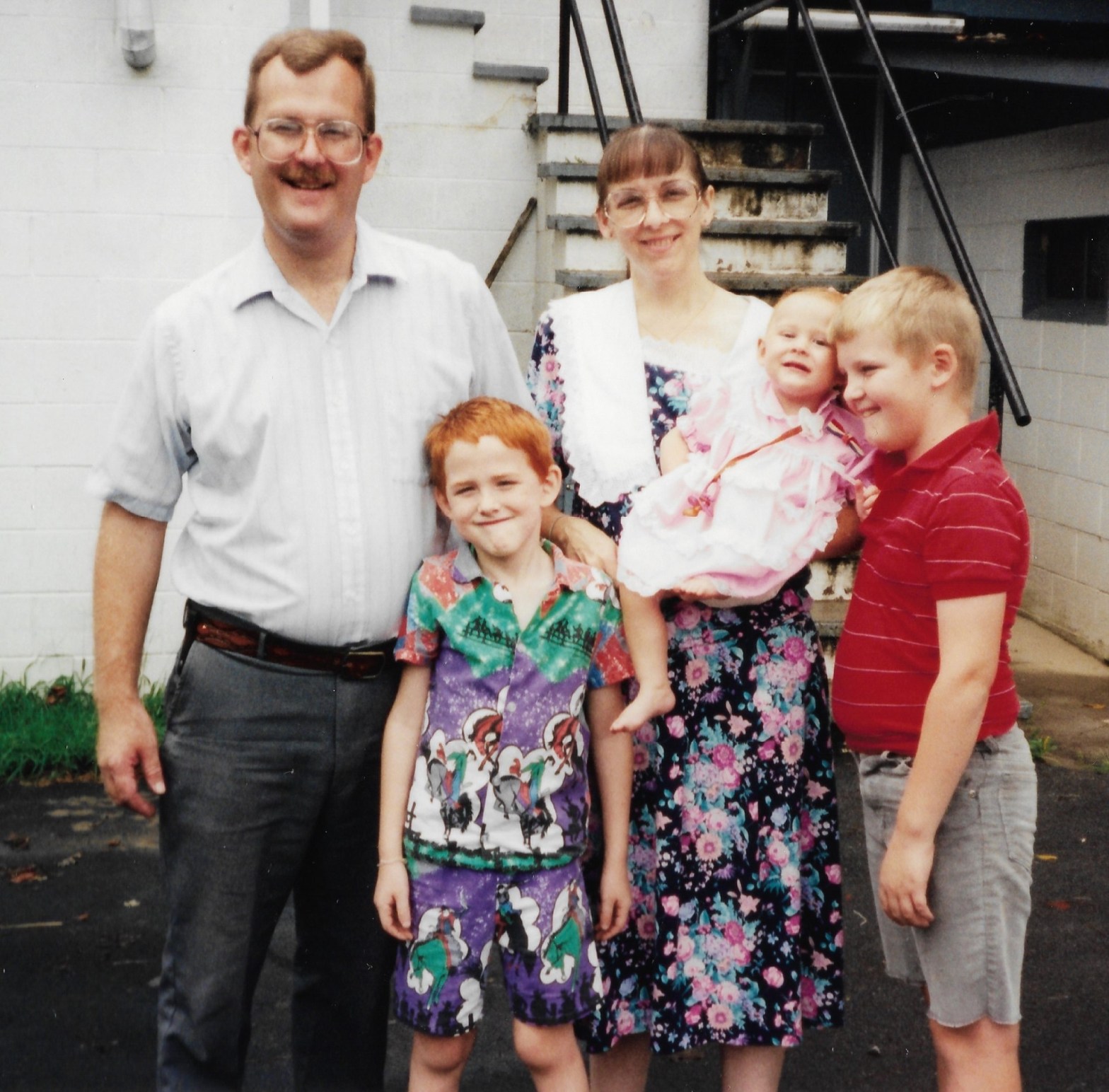
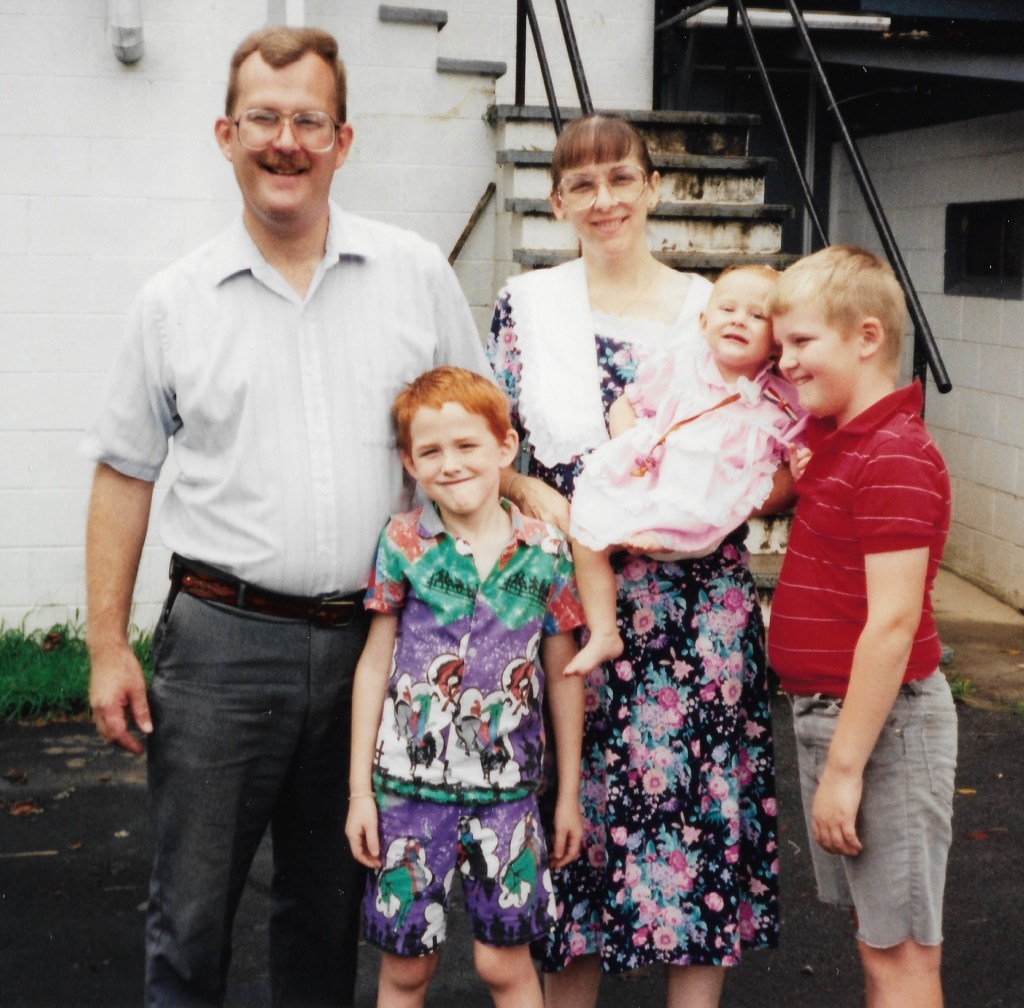
Our final picture together

My mom passed away on February 8 that year. She had developed pneumonia, and her body wasn’t strong enough to fight it off. At least I got to see her when she was somewhat aware before she passed. “I’m so happy to see you!” was the last thing she said to me. My kids got to be present and say goodbye. Thankfully, covid hadn’t spread through the country yet, so my whole family got to be there as she took her last breaths. My heart was broken.

But that’s not all. Shortly before this time, my dad had begun having symptoms. He’d had an MRI, and the doctors had found a lesion in his brain. He had been supposed to have an biopsy, but my mom’s passing put a delay on that. The moment my mom passed, my dad nearly passed out and had to be wheeled to the emergency room. His new scan showed that the lesion had nearly doubled in size. His biopsy was scheduled for the following week. My dad at my sister’s wedding in 2018

That next week, after his surgery, my brother put the doctor on the phone as he told us the news. It was worse than we could possibly have imagined. My dad had developed a brain tumor called glioblastoma, the same tumor that had taken the life of John McCain. It is the most aggressive form of brain cancer, and almost no one survives more than a year after their diagnosis. Shortly thereafter, my family went to visit my dad while he was recovering in the hospital. He wasn’t himself at all. He was angry. He was swearing (something I’d almost never heard him do). He was a very different man than the person I remembered growing up with.

But that’s not all. During our visit, we were asked to go to the apartment that my dad shared with my brother and get a few things. As we approached the building, we saw several fire trucks spraying water onto a burning building. I was in disbelief. Rachel told me that it was my brother’s building, but I didn’t want to believe it, so I got out of the car and started walking. I told some bystanders which building I was looking for, and they told me that it was the one that was on fire. I called my brother and dad and told them what had happened. As you can imagine, they were shocked.

To top everything off, some looters broke into the building after the fire was put out and it was being patrolled by security. They took everything. They even stole my mom’s ashes. We were truly devastated. 

Finally, my dad’s cancer progressed much faster than we could have imagined, and he passed away after a short battle, in a beautiful hospice center, on June 18th, the day after his 62nd birthday.

You can probably see why I think of 2020 as the worst year of my life. Nothing seemed to go well that year. Everyone says that 2020 was the worst, and I’m somewhat resentful of that fact to this day, because I suspect my 2020 was worse than almost everyone else’s. Most people were upset that they couldn’t go out to eat. For me, both my parents died and my brother’s apartment burned down and my mom’s ashes were stolen. I’m pretty sure I win.

I write this not to sound angry—although I was very angry at the time. I still haven’t fully recovered from that year, and I probably never will. I write it to mention that beauty emerged even from the worst moments of my life, from unexpected places.

We moved a lot when I was a child. We lived in at least 5 different states. My work gave me four weeks off after my dad died, and my sister and I were able to take a trip to visit many of the places we’d lived as children. We visited the college where our parents met. We visited the places that we lived in South Carolina and the place where she was born in Kentucky. We traveled to Florida to see the house my grandma lived in and that we visited many times as children. I think of that trip as almost a sacred pilgrimage of remembrance for my sister and me. It was a wonderful time spent together, grieving and trying to see the beauty in our circumstances. 

What have I learned? I don’t exactly know. Or I guess what I mean is I can’t quite put it into words. It would be easy to spout clichés like “Life is short” or “Hug your loved ones because you never know when they’ll be gone.” Those are both true, but they don’t do a good job of expressing the deeper meanings. I have found beauty in sadness. I have known what it means to be crushed. It would be easy to say that I can see God’s purpose in this, but I don’t really think that way anymore. The truth is, bad things happen. Crappy, awful, heart-rending things happen. There are times that you will want to just lie on the floor and curse God and humanity with the loudest voice you can muster. There will be times when you, like I have a tendency to do, hold your feelings inside, believing you can’t let anyone else see you cry because that would mean you’re not strong enough. Trust me, I’m not strong enough. 

What I’m saying is, keep your eyes open for the beauty that surrounds you, even in your darkest times. The way community comes together to surround you in your times of deepest grief, the way the sun sparkles on the mountains of Kentucky when it sets, the voice of your children as they cry and grieve the loss of someone who they knew loved them for who they are. Look for God in the empty spaces, in the darkness. God is there in those beautiful times, and he is trying to speak to you. If nothing else, let the dark times mold you into a more compassionate person, appreciating things that you now take for granted and reaching out to others experiencing darkness with a sympathy that only you can have because of what you have been through.

As I enter into the second anniversary of the darkest point in my life, I will make a decision to love those who feel unloved, and to understand those who feel like no one understands. Maybe that’s where the true beauty of suffering can be found.

Forgive the extra long post today. I hope that peace and blessings follow you wherever you are. You are loved beyond measure. Never forget to seek out the beautiful things in the darkness.

Judging the Judges

**This is a repost from my other website: givenscalais.org

Matthew 23:23-24 “Woe to you, scribes and Pharisees, hypocrites! For you tithe mint and dill and cumin, and have neglected the weightier matters of the law: justice and mercy and faithfulness. These you ought to have done, without neglecting the others. You blind guides, straining out a gnat and swallowing a camel!”

We grew up in a denomination that placed a lot of emphasis on acting a certain way, talking a certain way, and carrying out certain activities. As we have talked about in a previous post, there was a sense of those who were “in” and those who were “out.” If we did certain things, we were told that we may not truly be saved, that God was angry at us.

In the above passage, Jesus is calling out the religious leaders of his day for going through all the motions of their religion while neglecting its most important features. This ties in well with what we have been learning as a family from Micah 6:8, which in its context tells us that God does not want us to simply conform to a particular set of religious rules, but that God’s desire is for us to act justly, love mercy, and walk humbly with God. 


Jesus tells us that even if we live perfectly according to the expectations that are placed on us by our churches, but we are not acting justly or showing mercy, we have completely missed the point. Jesus even refers to these things as the “weightier matters” of the law! The Pharisees were guilty of living out the letter of the law, but ignoring its heart. Micah tells us in chapter 6 that God has no desire for our sacrifices or our songs and hymns. What God has wanted from the beginning is that we act justly, love mercy, and walk humbly with God.


This is a point that is missed by much of the church over its history. The church is known for its rules and expectations. People from outside the church know Christians as the people who oppose homosexuality, who don’t swear, who are prudish about matters of sex. Christians are known as the ones who are constantly in judgment of the way that people live.


I can’t help but wonder what Christians’ image in the world would be if we paid attention to what Jesus calls the “weightier matters” of justice and mercy. What if we were characterized by the love and compassion that we showed to those in need? What if we were known for advocating for criminal justice reform and ending the prison industrial complex that commits egregious injustices every day? What if we took Micah’s words seriously and were understood to be a people that did justice, loved mercy, and walked humbly with God?


I ask these questions not to try to make anyone feel guilty. I am guilty myself of thinking I’m better than other people because I do or don’t do certain things. What I want is to look inside myself and find places where I can make room for God to do his Kingdom building work in my heart so that I can show justice and mercy to others. Would you pray with us that we as a church will rise to this challenge; that we will move to act justly, love mercy, and walk humbly with God? Will you pray with us that when Jesus looks at us he will not call us hypocrites, but that we will live out the words of Micah and of Jesus? If everyone did these things, I believe the whole world would come to Jesus.

A Very Caffeinated Spirituality

Why did I choose to title my blog “Coffee and Theology”? To be honest, I initially thought of calling it “Caffeinated Theology,” but I realized I couldn’t spell caffeinated very well, and that people who were searching for it may not be able to either.

So what’s so caffeinated about my spirituality?

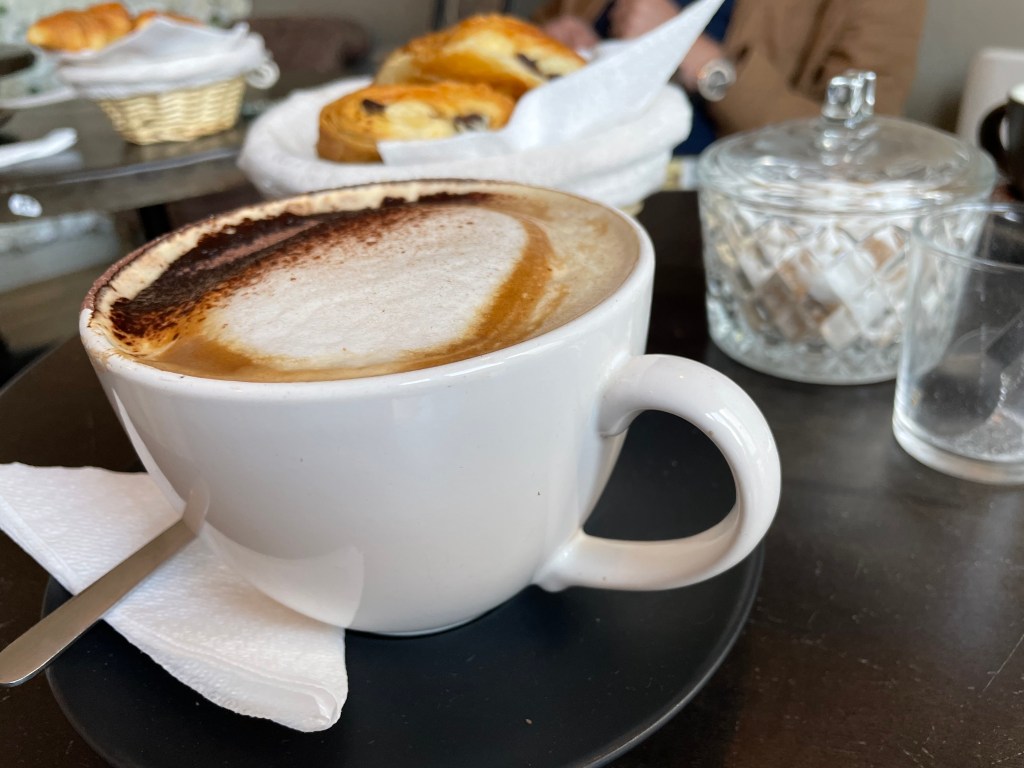
When I say caffeinated spirituality I mean it both literally and metaphorically. It’s literal in the sense that I love coffee. I am constantly caffeinated. My wife jokes that my blood is two thirds coffee. She might not be wrong. In fact, my mom was raised in Brazil, the child of American missionaries. She loved coffee and began letting me drink it when I was too young to remember. 

Since that time, I’ve grown to love coffee in all of its forms. I make coffee every day for my family. I’ve spent perhaps way too much on coffee apparatuses and coffee beans. I’ve attempted roasting coffee, although that experiment was a bit of a disaster. James Hoffman happens to be one of my favorite YouTubers. I drink coffee while meditating on theology.

So, yeah, I love coffee.

That’s the literal meaning.

Speaking metaphorically, I have had to deconstruct much of my fundamentalist Baptist upbringing. Deconstruction is a buzzword among young Christians these days. I understand that, and I normally hate to use buzzwords. However, I can’t think of a better way to express my experience.

However, I chose not to stop at deconstruction, instead clinging stubbornly to the faith I was handed down from my parents (along with my love of coffee, I also inherited my mom’s stubbornness). And so, I began the process of reconstruction.

I, like many people my age–I was born in 1989–was heavily influenced by the writings of Shane Claiborne, having been assigned his book Irresistible Revolution as reading in high school. It’s a long, long story that I’ll save for future posts, but the short version is that that book began my journey into progressive Christianity, and helped me land firmly in the Anabaptist camp.

“Hang on! What’s an Anabaptist?!” I hear you asking.

Again, you’ll need to wait for a future post for an in-depth explanation of that too. For now, what I mean is that I belong to a group of Christians that believes strongly in working toward living out the words of Jesus. We are a peace church and we strongly work toward bringing the justice of God’s Kingdom to life in this world.

Hence, the caffeination. 

I believe that my Christian faith should goad me into living a life that is different from the average person and seeks to bring about a positive impact on the world and my community. In my view, faith, like caffeine, is a stimulant. It is a stimulant that causes me to serve the poor and the underserved. It causes me to allow myself to be changed and to learn and grow through my interactions with those same people. It even causes me to love my enemies and pray for the oppressors. 

It’s a tall order. Like my morning coffee.