Sabbath.
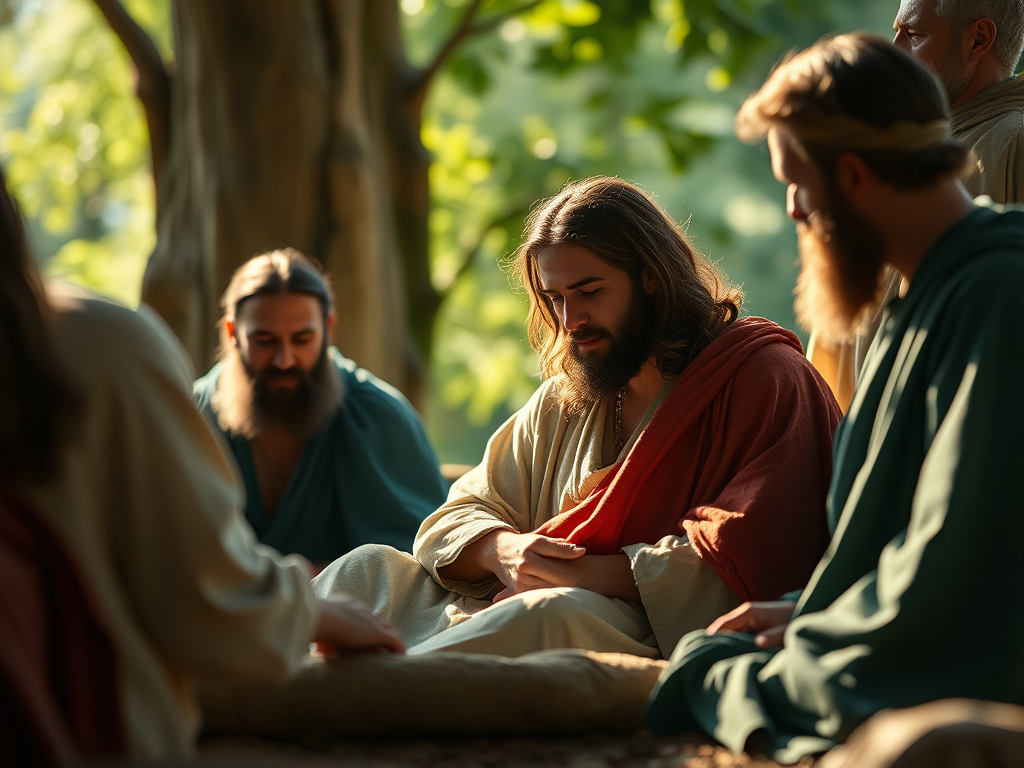
Sabbath is a word that wasn’t used much in my faith tradition as I was growing up. I always thought of sabbath as something that Jews do. I knew that Jesus talked about it, but since Jesus came to fulfil the law, the requirements surrounding sabbath no longer apply to the church. At least, that was the perspective I received. Of course, in the tradition I grew up in self care is considered a waste of time and selfish.
I’m reflecting on this today because my family is working on changing our schedule a bit to make our work among the refugee population in Calais more sustainable. We’ve decided for our second two-year term to make our weekends actual weekends. This means that we don’t generally work on Saturdays or Sundays. Of course, since we’re hardly ever at home during the week, we don’t have much time to do house work on weekdays, so we spend Saturdays doing the things we can’t do on other days. We use our Saturdays to do our grocery shopping, laundry, and house cleaning.
But then there’s Sunday. How we used to do things, we were too tired on Sundays to do much housework. As a result, our house was often strewn with laundry and toys. We’re working now on building a rhythm that allows some time for rest. We’ve decided to make Sundays our sabbath, at least as much as possible. Today we spent the morning before church preparing a meal and putting it in the oven. When we came home, our meal was ready, and we were able to have a delightful Sunday dinner together as a family. Later we’re going on a bike ride and watching a movie together.
This has me reflecting on deeper topics as well. The sabbath was always meant to be a special day of rest and reflection on the God that created us. Scripture commands as much, “Show respect for the Sabbath Day—it belongs to me” (Deuteronomy 5:12). The Sabbath is a theme throughout the Hebrew Scriptures, with constant reminders to respect the Sabbath and to keep it holy. Time for rest is clearly important to God.
But, just like any other commandment, fallible humans turned something that is meant for the good of humanity into a burden to be carried. This is a constant theme in the New Testament. There’s an occasion where Jesus and his disciples were walking through a wheat field, picking and eating the kernels from the wheat stalks. They were hungry, so they were doing what was natural. The religious leaders took issue with it, because the rules that had been written down over the centuries said that one cannot do any work or anything that seems like work on the Sabbath.

When they confronted Jesus and told him their problems with what he was doing, he pointed out there had been many exceptions to the rules that were made over the course of history, up to and including King David himself, who took holy bread from the temple on the Sabbath to feed his hungry troops. He ended his argument by stating, “People were not made for the good of the Sabbath. The Sabbath was made for the good of people” (Mark 2:27).
The point of this story is that God established the commandment to remember the Sabbath because he wanted his people to have a time to rest and worship the God that loved them. The Sabbath was always meant to be a time for people to rest, but the religious leaders ignored the spirit of this law and instead busied themselves with trying to work out exactly what “work” means. From this perspective, they created a list of rules about what does and what doesn’t count as work. This took the joyful rest and worshipful spirit out of the Sabbath and turned it into something difficult, a burden for the people for whom it had been meant as a restful day.
During the Christian Age, the concept of the Sabbath has largely been left behind, except by a few denominations. I wasn’t exposed to the concept until I was in my early 20s. During my volunteer program, we were given Fridays as our Sabbath days. On those days, we were free to rest in whatever way was helpful for us. I grew to cherish these days, since we worked hard the rest of the week and had many responsibilities.
As I’ve grown and been married and had children, I have begun to recognise the importance of the concept of Sabbath. For my family, we are trying to make it a day of rest, worship, and togetherness, where we take a break from the stress of life and refocus our hearts and minds on the things that are truly important: our faith and our family. It’s a day that leaves me recharged and ready to take on whatever the week has for me, in my work among refugees in Calais. It’s a work that can often be difficult both emotionally and spiritually. I need these moments of Sabbath to remember who I serve and why I do what I do. It’s also a day to focus on my kids, the most important people in my life.
It’s a tragedy that this concept has been lost somewhere along the way. I think it’s time to reclaim the concept of the Sabbath, and to focus on taking care of ourselves so that we can continue to follow God’s greatest commandments: to love God with all our hearts and to love our neighbours as ourselves.
But instead of taking the tactic of the religious leaders in Jesus’ day, let’s not turn the concept of Sabbath into a burden, weighing people down with a list of rules that they must follow in order to properly observe the Sabbath. There are plenty of rules in our everyday life. God understood the difficulties of life, and so he made Sabbath for us, to give us a chance for rest, to remember the things that are truly important. Sabbath is truly holy, and God wants us to rest in this holy space.
Blessed Sabbath, my friends. May you find true rest in Jesus Christ our Lord.
 Coffee & Theology