Well I guess it’s that time.
Time for me to begin delving into my faith formation. I’ve touched on it a bit so far, but it goes much deeper than you may perhaps realize. I talked in my previous post about my experience going to church at least three times every week. In that post, I made it sound completely positive.
And in a way, it was.
After all, I had my family, friends, and social gatherings all tied to one place. I didn’t go to school because I was homeschooled, so I didn’t have much opportunity to interact with other kids outside of my neighborhood apart from church. So in a real way, church was my community, my whole life.
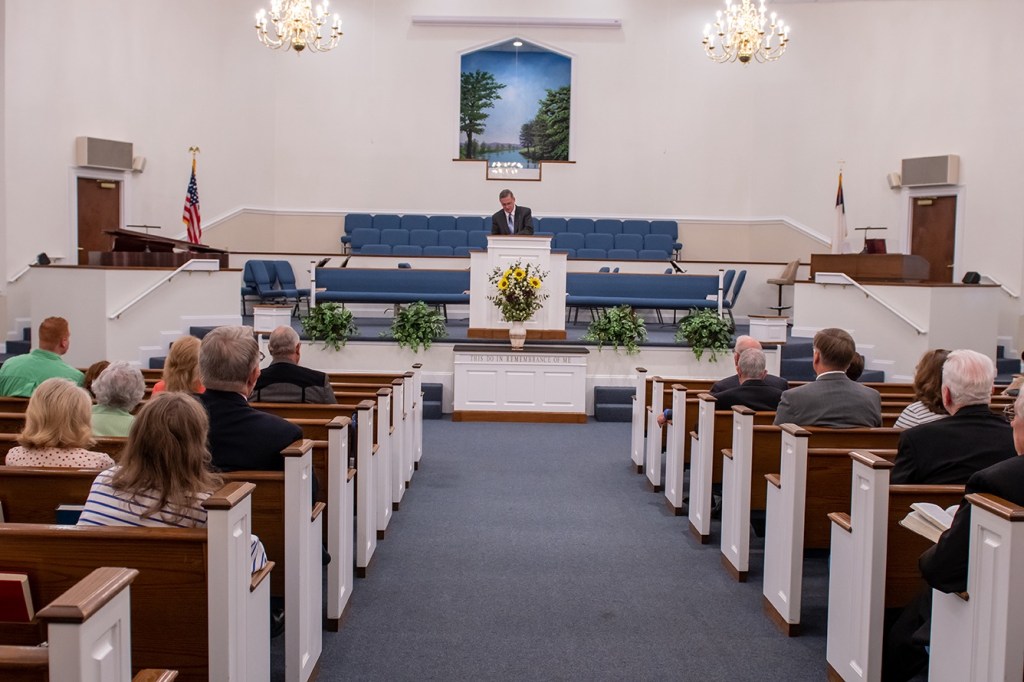
What I didn’t see as a child growing up there was how much its teachings were affecting me, how damaging some of the things that were said from the pulpit would end up being to my developing mind. I didn’t see how my mental health would suffer as a result of constant manipulation by the leaders, who stated quite plainly that they were just, “following the Bible.”
It would be impossible for me to list here everything that was said that could be damaging or cause me to doubt my salvation, so I’ll plan to only hit on a few main points. I’ll start with an anecdote. It’s a simple one, but it’s one of my favorites to tell because of how it’s equal parts funny and disturbing in hindsight. I tell it all the time when I speak in front of churches.
It was a normal Sunday evening service. I was perhaps 9 or 10 years old. As always, I was incredibly bored. My mom had started to take away any kind of drawing supplies or coloring pages she had given me when I was younger, so I was forced to pay attention to the sermon. Ugh.
This night we had a guest speaker. I don’t remember his name or where he was from. I just remember that our regular pastor wasn’t preaching that night. And while I don’t remember the main point of his sermon, something he said hit me hard. So hard, in fact, that I carry it with me to this day.
“When we get to heaven, we’re going to spend an eternity praising the Lord! We’ll sing hymns and songs; we’ll hear his greatness announced and his character discussed! All of eternity will be spent worshiping God!”
In my mind, I thought, “That sounds like the most boring, awful thing ever!”
And immediately following his pronouncement, the preacher said, “If that doesn’t sound amazing to you, you don’t know Christ as your Lord and Savior.”
And I was devistated.
“I must not know Christ as my Lord and Savior!” I thought to myself in a panic. Thankfully, I had just the remedy for this: asking Jesus to save me.
And so I did. Again. And again. And again. And again.
You see, this is just one example of a pattern. Our church would say that they didn’t believe you could lose your salvation once you’d accepted Jesus as your Lord and Savior. But they’d append it by saying that if you didn’t do this, or believe that, or act this way, you never really knew Jesus in the first place.
This, probably more than anything else, really messed with me. I must have accepted Jesus as my Lord and Savior hundreds of times, without exaggeration.
But that’s not all.
From the time I was born I was programmed. I was programmed to believe that the church had the answers, and that only this church had the answers. The pastor placed such an emphasis on “correct doctrine” that he believed anyone who disagreed or had differences from this doctrine was in danger of hellfire.
I was programmed to believe in the Bible as the inerrant Word of God. See, there aren’t any contradictions in the Bible. There aren’t any incorrect statements. Everything in the Bible is historically accurate and is meant to be taken literally and plainly.

This of course means that any scientific or historical research that contradicts what the Bible literally says must be incorrect, because the Bible can’t be wrong. And so, the Genesis creation story (really there are multiple creation stories in Genesis, but that’s beside the point) must necessarily be an accurate representation of how the earth was created.
But “correct doctrine” didn’t just include biblical inerrancy. It also included agreeing with every standard set forth by the leaders of the church. Essentially, this meant having some form of control over every facet of our lives.
Another anecdote: I was sitting in church (as was often the case). The pastor was preaching this time. He was preaching about the evils of worldly music (any music that isn’t classical or explicitly religious).
“I used to counsel a young woman. She confessed to me once that she liked to listen to rock music. She said, ‘I don’t listen to heavy metal or anything; I just listen to light rock.’
“I’ll have you know that two weeks later that woman drove a car off a cliff and killed herself!”
And thus I learned about the dangers of rock n’ roll.
But seriously, I was led to believe that there wasn’t possibly anything else going wrong in this young woman’s life that could have led to her taking her own life. It was the rock music that killed her. In my 10 year old mind, it made sense. It hammered home the point that I should never listen to rock music.
Worship music was a big no-no too. In fact, any kind of music with a beat or with drums in it was viewed as immoral. Worship music was worst because it was considered to be “mixing truth with error.” And so the only songs we would sing in church were hymns. And the occasional patriotic song.
And I also heard things preached about making sure we obey our parents. Obedience was a big theme in the preaching at this kind of church. Our pastors obey God; our parents obey our pastors; and we obey our parents. If I didn’t obey immediately, not only would I risk being punished by my parents, but I also risked being punished by God. And if I didn’t feel bad about it, I might not be saved, so I would ask Jesus Christ to be my Lord and Savior again.
And round and round and round it went.
Anyway, these are just a few examples. There are more. Many, many more. But that would require many blog posts, and I think I’d like to address the deeper themes one at a time later on. For now, I’m just summarizing my story.
The point is, I was made to feel inadequate and completely dependent on my church. Any questioning, and toe out of line, and I was made not only to feel guilty, but also to question my own salvation. The Bible was weaponized, and God was made to seem constantly angry. He was watching and scrutinizing every little thing I did to make sure I didn’t screw up.
I didn’t have words for it then, but my mental health was seriously struggling, even when I was a child, as a result of this type of manipulation. It wasn’t until I was in my 30s that I developed the language I needed. But that’s a story for another time.
But my story is far from over. In my next post, I’ll discuss the end of my time in South Carolina and my move to Minnesota, where I spent much of my adolescence.
You’re going to want to follow along.
 Coffee & Theology